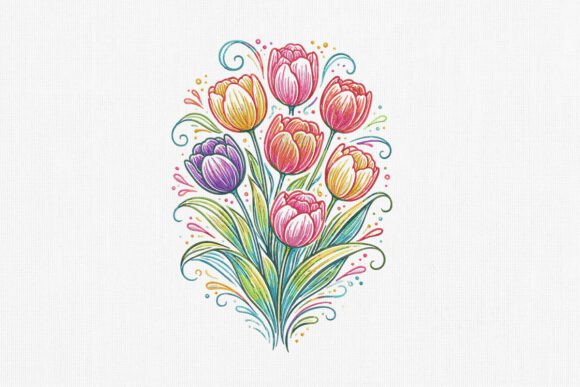
Artistic Tulip Floral Embroidery Design Review
As a professional embroidery designer specializing in commercial merchandise and branded apparel, I approach every new machine embroidery design with a critical eye toward production viability. When evaluating the Artistic Tulip Floral Embroidery Design for small business applications, my primary focus shifts beyond mere aesthetics to practical performance on retail goods. This review examines how this specific digital file translates from screen to fabric, specifically for entrepreneurs, Etsy sellers, and local shops seeking to elevate their brand identity through high-quality needlework.
Visual Personality and First Impressions
The initial assessment of the Artistic Tulip Floral Embroidery Design reveals a style that balances organic charm with commercial clarity. Described as a hand-drawn illustration featuring a vibrant bouquet, this design immediately signals a handmade product aesthetic that is highly desirable in current markets. For businesses like artisanal bakeries, florists, or boutique studios, this visual language communicates warmth and craftsmanship without appearing amateurish.
Unlike rigid, corporate-style floral vectors, the hand-drawn nature of this embroidery file suggests movement and texture. From a digitizing perspective, this usually implies satin stitches for stems and petals rather than dense fill areas, which is excellent for reducing bulk on lightweight garments. The "vibrant" description indicates distinct color separation, a crucial factor for thread colors to pop against various background fabrics. However, the artistic complexity requires careful scrutiny regarding stitch pathing to ensure the final output retains that sketched elegance after being stitched out at high speeds.
Evaluating Performance Across Business Merchandise
For small business owners, versatility is key. A single design asset must often serve multiple purposes across different product lines. Here is how the Artistic Tulip Floral Embroidery Design performs in real-world commercial scenarios:
- Apron Embroidery: This is perhaps the strongest use case. Aprons provide a stable, flat canvas ideal for detailed bouquets. The vertical orientation typical of tulip arrangements fits perfectly above a pocket or centered on the chest, creating an immediate focal point for service staff.
- Tote Bag Design: Canvas totes are staples for retail branding. The natural fiber texture of cotton canvas complements the organic lines of this floral motif. Because totes are often unstructured, the design’s likely moderate stitch density prevents the bag from becoming stiff or puckered.
- Custom Apparel and Staff Uniforms: On polo shirts or linen button-downs, this design works beautifully as a left-chest logo accent. It softens the look of a uniform while maintaining professionalism. For creative studios or pet brands, it adds a layer of personality that generic clipart cannot achieve.
- Embroidered Patch Production: Creating standalone patches allows businesses to sell add-ons or customize inventory later. The bouquet format naturally lends itself to oval or shield-shaped patch borders, making it a self-contained unit that doesn't require extensive background filling.
Critical Considerations for Caps and Small Formats
While the Artistic Tulip Floral Embroidery Design excels on flat surfaces, cap embroidery presents unique challenges. The curved surface of a hat front distorts straight lines and can compress vertical elements. If the tulip bouquet is tall and narrow, it may need to be resized or re-digitized specifically for headwear to prevent registration issues between outlines and fills.
Furthermore, when adapting this design for smaller items like sleeve cuffs, collar points, or product packaging accents, detail loss is a significant risk. Hand-drawn styles often rely on fine lines to convey texture. At reduced sizes, these details can merge into a muddy mass of thread. I strongly advise testing the minimum viable size before committing to bulk production. If the design includes tiny text or intricate stamen details within the bouquet, they may need to be simplified or removed entirely for formats under three inches wide.
Impact on Brand Value and Customer Perception
In the competitive landscape of small business merch, perceived value dictates pricing power. A well-executed floral design does more than decorate; it validates the brand's attention to detail. When customers see the Artistic Tulip Floral Embroidery Design cleanly stitched on a tote or apron, they subconsciously associate that precision with the quality of the coffee, flowers, or handmade goods being sold.
Consistency across design assets builds trust. Using this same tulip motif on packaging, uniforms, and event merchandise creates a cohesive visual system. The "artistic" quality differentiates the brand from competitors using stock library art, fostering a sense of exclusivity and local connection. For Etsy sellers, this level of branded presentation justifies premium pricing and encourages repeat engagement by making the unboxing experience feel special.
Professional Designer Notes for Production Success
To ensure the Artistic Tulip Floral Embroidery Design meets commercial standards, follow these technical protocols before running live orders:
- Verify Specifications: Always check the included documentation for exact stitch count, recommended hoop size, and file formats. Never assume compatibility with your machine without confirmation.
- Test Stitch on Target Fabric: Digital previews are deceptive. Run a sew-out on the actual fabric texture you intend to use. Linen, denim, and polyester blends all react differently to tension and density.
- Stabilizer Selection: Given the likely detail in a hand-drawn bouquet, proper stabilization is non-negotiable. Use cut-away stabilizer for stretchy knits to prevent distortion over time, and tear-away for woven canvases. Consider topping for textured fabrics to keep stitches crisp.
- Contrast Check: Test the design in grayscale or black-and-white first. This reveals whether the design relies too heavily on color contrast rather than structural definition. If it looks flat in monochrome, it may lack sufficient depth for dark uniforms.
- Create Printable Mockups: Before investing in thread and blanks, generate a realistic mockup to show clients or stakeholders. This manages expectations regarding size and placement relative to garment seams and pockets.
- Licensing Confirmation: Crucially, verify the commercial license terms included with the digital embroidery file. Ensure you have the right to use the design on merchandise for sale, not just personal projects.
Optimizing the Finished Product
The transition from a digital file to a finished product requires respecting the limitations of the medium. While the Artistic Tulip Floral Embroidery Design offers immense potential for commercial embroidery projects, success lies in matching the design's characteristics to the appropriate substrate. Avoid placing highly detailed bouquets on ribbed knits or uneven terry cloth where the hand-drawn lines will get lost. Instead, reserve those complex versions for smooth, tight-weave fabrics.
For businesses planning long-term use, consider ordering a professional digitization adjustment if the standard file doesn't suit your specific niche application. Perhaps you need a cap-friendly version or a simplified tag-sized variant. Investing this extra step ensures that your custom apparel maintains its integrity through hundreds of wash cycles and wears. Ultimately, this floral design serves as a powerful tool for visual storytelling, provided it is executed with the technical diligence that professional merchandise demands. By treating this embroidery file as a strategic business asset rather than simple decoration, small business owners can create lasting impressions that resonate with their target audience.